Personal library
Reports, panels, documents, dates, labs, and notes in one persistent space.
Genomic companion
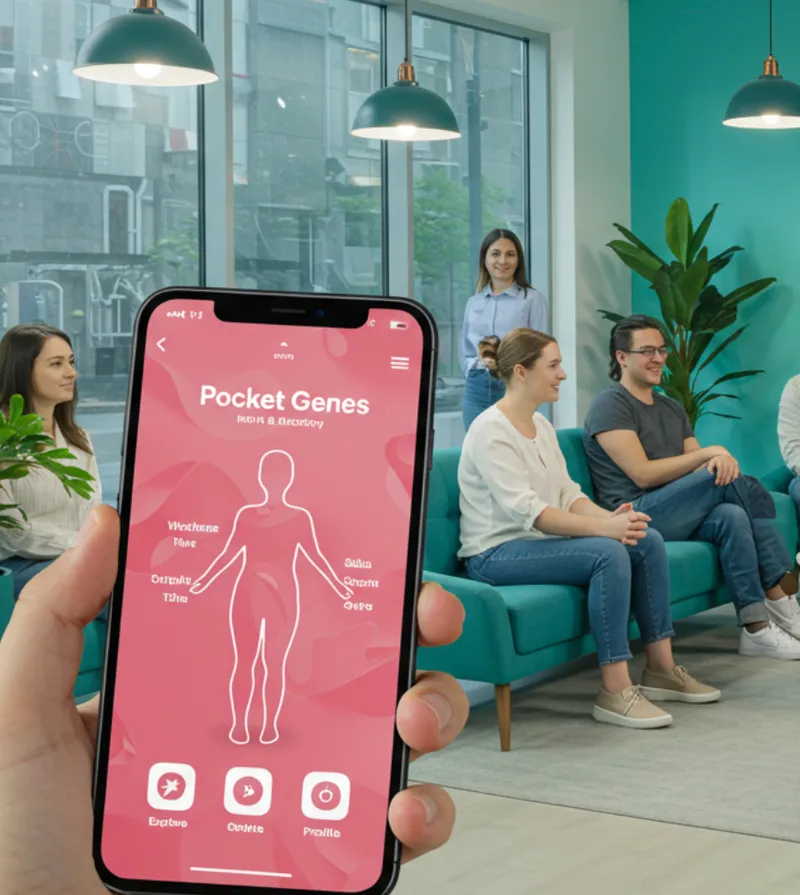
Pocket Genes turns reports, panels, and complex concepts into a personal space to review, learn, prepare questions, and share information carefully.
More than visualization
The mobile experience should show data clearly, but it also needs to answer practical questions: where is my report, what does this term mean, which genes did this panel cover, what should I review before seeing the specialist, and what can I share.
The personal companion organizes information in layers: documents, concepts, reported variants, history, notes, and next questions.
Each layer responds to a concrete need during the genetic journey.
Reports, panels, documents, dates, labs, and notes in one persistent space.
Explanations of variants, inheritance, penetrance, carrier status, pharmacogenomics, and sequencing.
Question lists, open topics, and points to confirm with professionals.
Clear ways to share relevant information without losing privacy or context.
Understanding
Genetic information arrives loaded with technical terms. Pocket Genes should turn them into language people can review, trust, and return to.
Explain terms when they appear, not in a separate library no one finds.
Distinguish reported data, clinical interpretations, and questions that require a professional.
Help a parent, adult patient, or caregiver review essentials without genetics training.
Preparation
The product should not promise diagnoses. It should help people arrive with the right material and more precise questions.
Reports, dates, previous tests, background, and notes ready to share.
Questions about genes not covered, reanalysis, relatives, inheritance, specialists, and next tests.
Track answers, new indications, and recommended resources.
Responsible design
The value appears when information stops being scattered and starts supporting informed decisions with the medical team.